
Last updated November 25, 2026
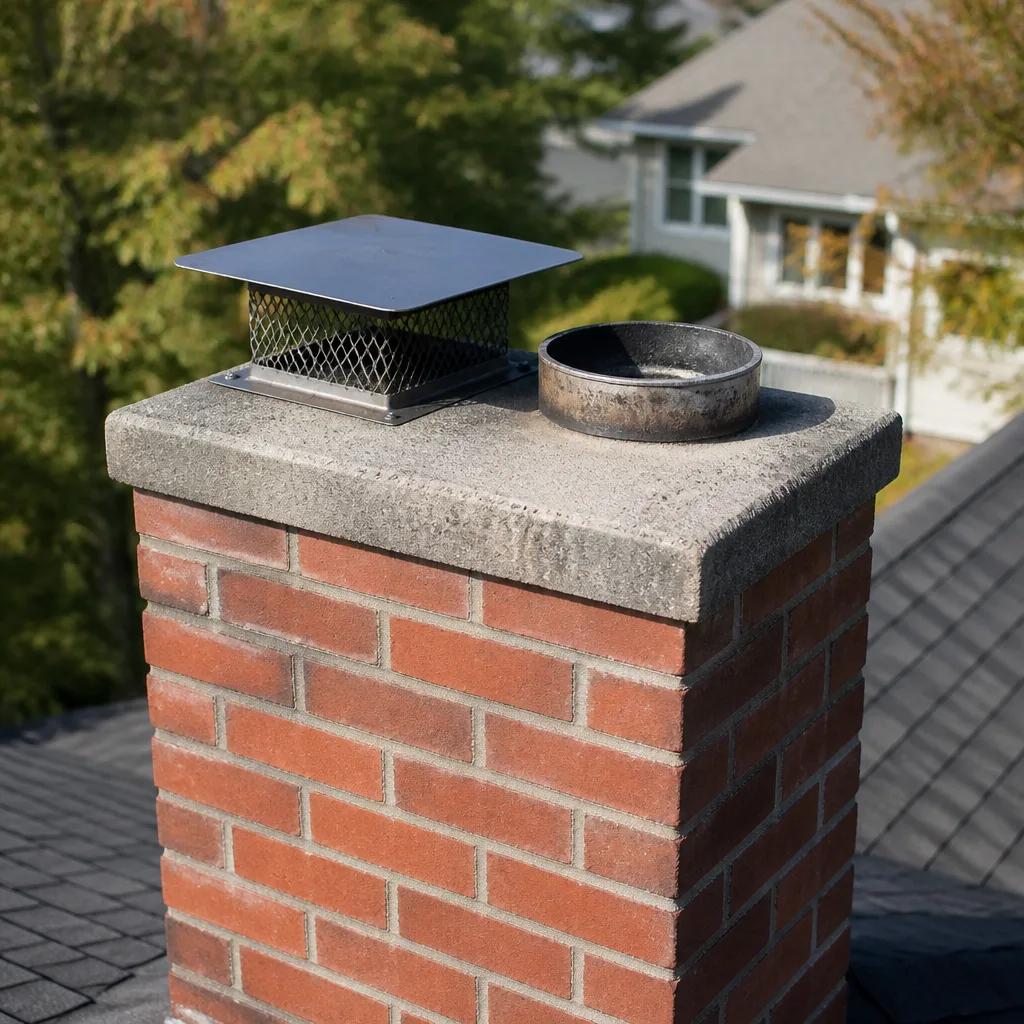 Sweep & inspection
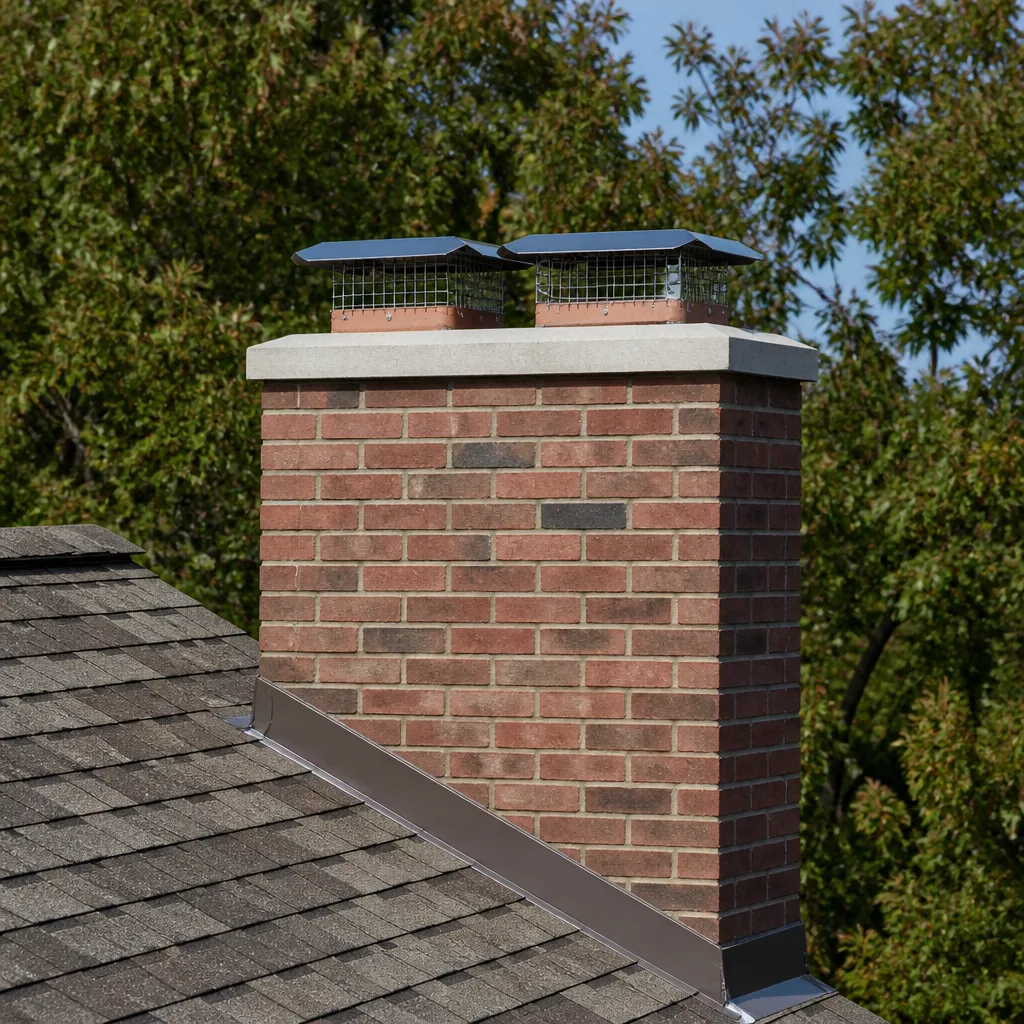 Caps & crowns
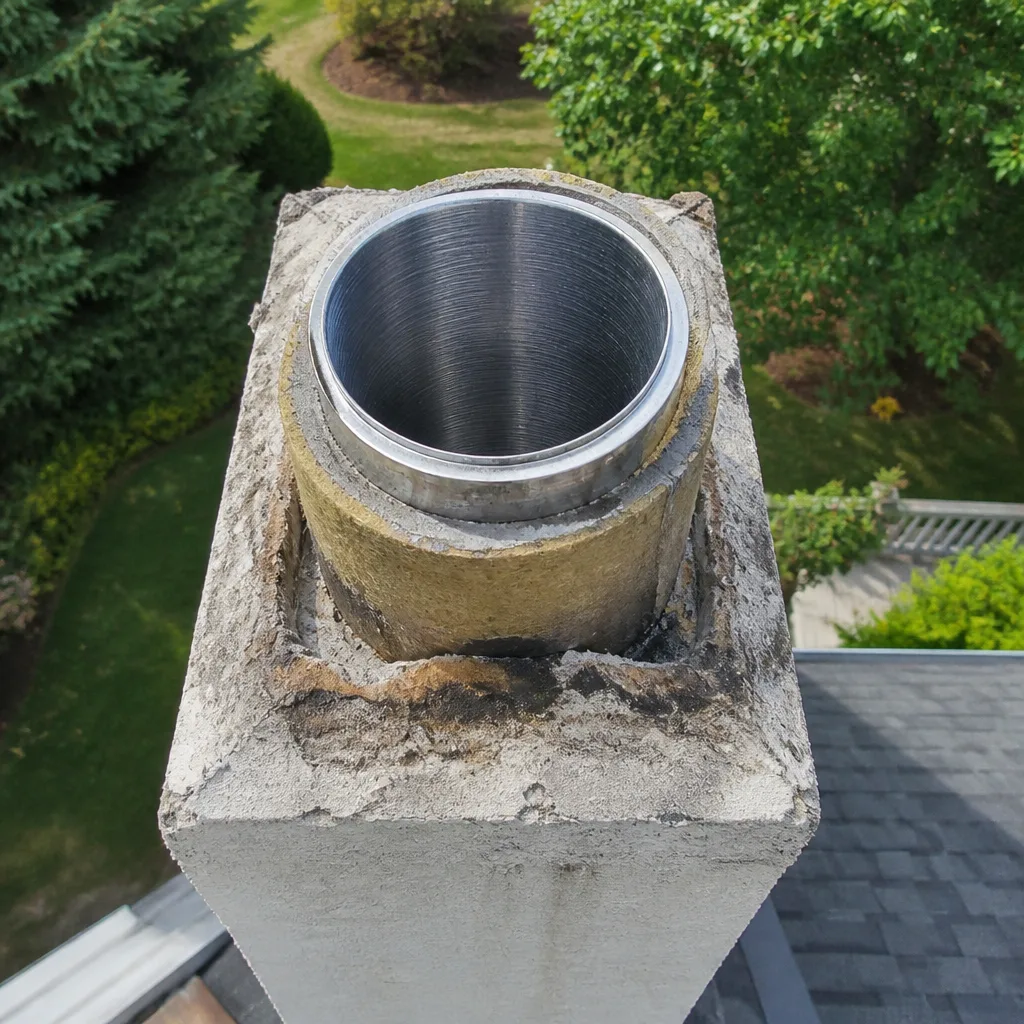 Flue relining
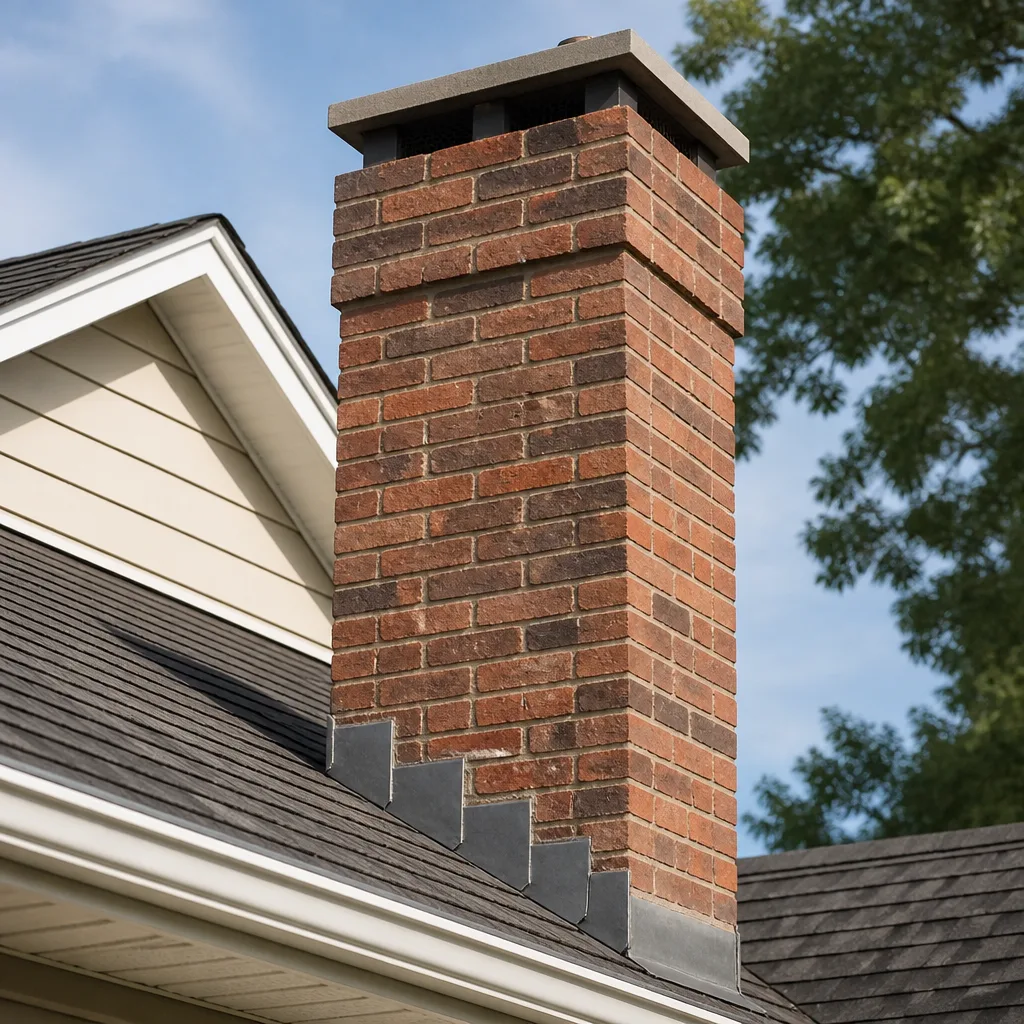 Masonry repair
 Gas fireplace service
Level 1 sweep and inspection to the NFPA 211 annual standard - flue, crown, cap, and flashing checked and photographed
Chimney sweep logs do not sweep chimneys. They loosen some creosote - which then falls where a brush and vacuum still have to collect it.
Chimney Sweep Troubleshooting in Lake Stevens: Common Problems and How to Fix Them
A smoky living room after lighting a fire isn’t always a dirty flue. In our experience across Lake Stevens, the same symptom (smoke rolling out of the firebox, a smell that won’t leave, a fire that’s hard to get going) can come from four or five very different mechanical causes, and cleaning only addresses one of them. A blocked flue needs a sweep. A pressure problem needs air. A failed cap needs replacement. A cracked liner needs resurfacing or a new liner. If you guess wrong, you pay for work that doesn’t solve the problem and the smoke comes back on the next cold night. This guide maps symptoms to their actual causes so you know what you’re dealing with before anyone shows up at your door.
Quick Answer
Most chimney problems in Lake Stevens come down to one of five root causes: a blockage or soot buildup in the flue, a failed or missing cap, negative pressure inside the house, a damaged liner, or water intrusion through the crown or flashing. Backdraft, smoke rollback, lingering odors, and a weak draw each point to a different combination of these. A proper diagnosis starts with a systematic inspection (visual plus camera), not with a cleaning brush. Cleaning fixes the blockage version. It does nothing for the other four.
Styles & brands we work with
- Sweep & inspection
- Caps & crowns
- Flue relining
- Masonry repair
- Gas fireplace service
Table of Contents
- Symptom-to-Cause Mapping: What Your Chimney Is Telling You
- Backdraft, Blockage, Downdraft, or Negative Pressure?
- How Snohomish County Moisture Accelerates Chimney Failure
- The Diagnosis Sequence a Sweep Should Follow
- What You Can Safely Check Yourself vs. What Needs a Camera
- When Cleaning Solves It and When It Only Delays a Repair
- Caps and Crowns: The Two Barriers That Prevent Most Problems
- Liner Troubleshooting: Cracks, Delamination, and Resurfacing Options
Symptom-to-Cause Mapping: What Your Chimney Is Telling You
Before we pick up a brush, we ask what the chimney is doing. The symptom usually narrows the diagnosis to two or three possibilities, and those get tested first. That sequence matters in Lake Stevens because so many homes have the same visible setup (masonry chimney, metal cap, wood insert or open fireplace) but completely different underlying causes.
Here’s how the most common complaints map to their causes:
- Smoke rolls out of the firebox when you light a fire: usually a blocked or partially obstructed flue, a cold flue that hasn’t warmed up, or negative pressure pulling air down the chimney instead of up. Cleaning solves the first. The other two need pressure or draft correction.
- Smoke comes back down after the fire is burning well: typically a downdraft caused by a cap that’s damaged, undersized, or missing a wind band, or by a taller structure nearby that changes airflow over the roof.
- Persistent smoky, creosote, or musty smell when the fireplace is cold: often a buildup of creosote and soot in the smoke chamber combined with a pressure imbalance pulling that smell into the living space, not just a dirty flue.
- A weak, lazy fire that’s hard to keep lit: restricted air supply, a partially closed damper, a clogged cap screen, or a flue that’s undersized for the firebox opening.
- Water stains on the ceiling near the chimney, or rust on the firebox: a failed cap, a cracked crown, or failed flashing at the roof line. This is a water-intrusion problem, not a draft problem.
- White, chalky staining on exterior brick: efflorescence, which signals moisture moving through the masonry. It points to a crown, cap, or flashing failure above.
For a Lake Stevens homeowner, the fastest way to narrow this down is to note exactly when the symptom appears: on first light, after 20 minutes, only on windy days, only in cold weather, or all the time. That single detail reliably cuts the diagnosis list in half.
Backdraft, Blockage, Downdraft, or Negative Pressure?
These four terms get used interchangeably by homeowners, but they describe different mechanical problems that need different fixes. Getting the category right is the difference between a $200 cleaning and a $900 repair, or between a repair that works and one that doesn’t.
Blockage
A physical obstruction in the flue: soot and creosote buildup, a bird or squirrel nest, leaves, or a collapsed liner section. The draft can’t establish because there’s nowhere for the smoke to go. Cleaning plus a camera inspection confirms it and clears it.
Downdraft
The chimney is clear, but wind pushes air down the flue from above. This shows up on windy days and is usually a cap problem: a missing cap, a cap without a wind band, or a cap that’s deteriorated and no longer deflects the way it should. Replacing the cap with a proper wind-resistant model fixes it. We typically specify a Chimney Sweep Lake Stevens grade cap from Olympia Chimney or Copperfield because those are built to shed wind and water together, not just sit on top of the flue.
Backdraft
The house itself is pulling air down the chimney because the pressure inside is lower than outside. Causes include a tightly sealed house, a range hood or bathroom fan running, a furnace or water heater in the same pressure zone, or a second fireplace competing for the same air. Cleaning does nothing here. The fix is usually a pressure correction: opening a window a crack as a test, adding a dedicated combustion air supply, or adjusting the way the house is ventilated.
Negative house pressure
Backdraft is the symptom; negative pressure is the cause. Homes in Lake Stevens that have been tightened up over the years (new windows, weatherstripping, added insulation) can have less make-up air than the original build had. The chimney becomes the path of least resistance, so the house pulls air down the flue. A combustion air assessment is part of any responsible diagnosis.
The practical test: light a small fire with a window cracked in the same room. If the smoke direction corrects immediately, you’re dealing with negative pressure and the fix is air, not cleaning. If it doesn’t correct, the flue itself is the problem and a camera inspection is the next step.
How Snohomish County Moisture Accelerates Chimney Failure
Puget Sound weather does something to masonry chimneys that drier climates don’t. Rain, high humidity, and the freeze-thaw cycle that hits Snohomish County in winter create a specific pattern of failure: moisture soaks into the brick and mortar, freezes, expands, and pushes the surface off. That’s spalling. It happens faster here than in Eastern Washington because the chimney stays wet longer between dry spells.
The three failure modes we see most often in Lake Stevens:
- Spalling brick and crumbling mortar. Water enters through the crown or the cap, migrates through the masonry, and freezes. The face of the brick flakes off. Once it starts, it accelerates: each freeze-thaw cycle takes another layer.
- Liner delamination. Clay tile liners absorb moisture and, when heated, expand and contract. Over repeated seasons, the tiles crack or delaminate. A camera inspection and a formal chimney inspection are the only ways to see this from the inside. It’s invisible from the ground.
- Crown cracking. The concrete crown on top of the chimney is the first line of defense against water. Hairline cracks let water in, which is why a crown in Lake Stevens often fails before the masonry below it does. Once the crown is compromised, everything underneath is a moisture problem waiting to happen.
The pattern to watch for: if the chimney is on the north side of the house, or the cap is a plain flat-topped model, the moisture exposure is worse. A properly installed cap with screen and a properly sloped, sealed crown are what keep water out. We use HeatShield liner resurfacing on spalled or worn flues because it gives the chimney a new interior surface without a full rebuild, and that matters in a climate where moisture won’t stop being an issue.
The Diagnosis Sequence a Sweep Should Follow
A chimney diagnosis should feel like a process, not a sales call. Here’s the sequence a trained technician works through, roughly in order, when you call about smoke, odor, or a weak fire. If your sweep skips straight to a recommendation without going through these steps, ask why.
- Listen and record the symptom. When does it happen? On first light, after warm-up, on windy days, when the furnace runs? This narrows the list before any tool comes out.
- Exterior visual check. The cap, crown, flashing, brick condition, and any signs of efflorescence are noted from the ground or roofline. This is where water-intrusion problems usually get caught.
- Firebox and damper check. The firebox, damper operation, and smoke chamber are inspected for obvious obstruction or damage.
- Flue camera inspection. A camera goes up the flue to look for cracks, delamination, misaligned tiles, and blockages that aren’t visible from below. This is the step that separates a proper diagnosis from a look-and-guess.
- Draft and pressure test. A draft gauge or simple smoke test establishes whether the problem is pressure-related. The window-crack test described above is a simple version of this.
- Written findings, with photos. You get the findings and the photo report. The recommendation follows the evidence, and the evidence follows the inspection.
For homeowners in Lake Stevens who are buying or selling a house, a formal documentation package matters because the buyer’s inspector will want it. An inspection provided as a standalone service is what gives you that on file.
What You Can Safely Check Yourself vs. What Needs a Camera
We’re not going to tell you to climb on the roof. But there are checks you can do safely from the ground or the fireplace opening that help narrow the diagnosis before you call.
Safe for a homeowner to check
- Firebox condition. Look for obvious cracks in the firebox walls or a damaged firebrick, and check whether the damper opens and closes smoothly.
- Damper position. With the fire out, make sure the damper opens fully. A partly closed damper is a common cause of a weak fire.
- Visible cap from the ground. Binoculars work. Is the cap there? Is the screen intact? Is a bird or squirrel sitting on it?
- Smoke test with a window cracked. A small, safe fire with one window slightly open tells you whether pressure is part of the problem.
- Signs of water. Staining on the ceiling or walls near the chimney, rust on the firebox, or efflorescence on exterior brick.
Requires a professional with a camera
- Liner condition. Cracks, delamination, and misaligned tiles are only visible from inside the flue with a camera.
- Creosote levels. The actual depth and condition of creosote buildup can’t be reliably judged from below. Glazed creosote in particular is a fire hazard and needs to be identified by inspection.
- Smoke chamber and flue transition. The smoke shelf and the transition into the flue are hidden on most fireplaces.
- Crown and flashing integrity. Judging whether a crown is cracked or flashing has failed usually requires getting up close and looking at the detail.
Safety note: if you smell gas, or if you see signs of an active chimney fire (a roaring sound like a freight train, or glowing metal at the top of the chimney), stop and call the fire department first. Do not try to inspect it yourself.
When Cleaning Solves It and When It Only Delays a Repair
This is the most important question in chimney troubleshooting: is the problem the buildup, or is the buildup hiding the problem? Cleaning is the right answer when the diagnosis is a blocked flue, a soot-heavy flue, or creosote buildup that’s restricting airflow. Cleaning is the wrong answer (or an incomplete answer) when the underlying issue is structural or pressure-related.
Cleaning solves it when:
- The flue is blocked by soot, creosote, or a nest, and the liner is otherwise sound.
- The fire is weak because the flue is restricted, and a camera check confirms no structural damage.
- The smell is soot and creosote residue, and a full cleaning removes it.
Cleaning only delays it when:
- The liner has cracks or delamination. Cleaning removes soot, but the liner is still compromised and its integrity doesn’t change.
- The problem is negative house pressure. A clean flue still backdrafts.
- The cap is damaged or missing. The flue is clean; the wind still comes in.
- The crown is cracked. Water still enters no matter how clean the flue is.
The honest position is this: a cleaning that’s followed by “your liner is failing, that’ll be thousands” is exactly why homeowners distrust chimney companies. The fix is documentation. A camera inspection with photos you can see means the recommendation follows the evidence, and you can decide for yourself. That’s also why we include the camera inspection and photo report while the sweep is being booked, not after. It’s the difference between being told and being shown.
For a Lake Stevens home that hasn’t been serviced in several years, the safe sequence is inspection first, then cleaning if the inspection says it’s needed, then a repair conversation only if the camera found something. If you’re not sure where you stand, a chimney sweep is usually the right starting point for a fireplace that’s been sitting through a few wet seasons.
Caps and Crowns: The Two Barriers That Prevent Most Problems
Ask any chimney professional what causes the most damage in a wet climate and the answer is water getting in from the top. The chimney cap and the crown are the two components that keep rain, snow, and animals out. When either fails, everything below it becomes a moisture problem: the flue, the masonry, the firebox, and eventually the interior of the house.
The cap sits on top and covers the flue. It does three jobs: keeps water out of the flue opening, keeps animals out with a screen, and deflects wind so the flue doesn’t downdraft. Caps from Olympia Chimney and Copperfield are sized to the flue and built to last; generic hardware-store caps are the most common cause of downdraft problems we see.
The crown is the concrete surface around the flue at the top of the masonry. It should slope away from the flue and be sealed. A cracked crown lets water into the masonry below, which then freezes and spalls. A crown that fails typically causes more damage than a cap that fails, because the water goes into the structure rather than straight down the flue.
If you’re having either installed as new construction or replacement, the work falls under our chimney repair scope and is done with an eye to how the whole chimney sheds water. A new cap on a cracked crown is half a job. The two work together, and treating them as a system is what keeps heat in and water out over the next few seasons in Lake Stevens.
Liner Troubleshooting: Cracks, Delamination, and Resurfacing Options
The liner is the flue’s inner wall, and it’s the component most likely to fail silently. In Lake Stevens, the combination of moisture, repeated heating and cooling, and the inherent brittleness of clay tile makes liner cracking and delamination common in older chimneys. The tricky part is that a liner can be badly cracked without any visible symptom from the outside; it shows up in a camera inspection, a smoke test, or (worse) a chimney fire.
What the diagnosis usually comes down to:
- Hairline cracks in clay tile. Not always an emergency, but they let moisture in and combustion gases out. The right response is assessment, monitoring, and eventually resurfacing or relining.
- Delamination or missing sections. The tile has come apart. This is a safety issue, not a cosmetic one. A camera inspection will show it.
- A liner that’s undersized for the appliance. Common when a new wood insert or furnace was installed without resizing the flue. This shows up as a weak draft or smoke rollback that cleaning won’t fix.
Two professional-grade solutions we install and work with regularly:
HeatShield liner resurfacing is a repair system that restores the flue’s interior surface from the inside. It works by applying a specialized material to the liner walls, sealing cracks and restoring an even surface. It extends the life of the chimney without demolition, which is why we use it on flues that are worn but still structurally sound.
DuraFlex flexible liners are what professionals specify for relining applications, including when the existing liner can’t be resurfaced or when a rough-insulated flue is being brought up to modern standards. They’re not available at retail, and that’s for good reason: proper sizing and installation matter more than the product itself.
If the chimney supplies gas-fired appliance venting as well, liner work and fireplace appliance work often go together. That’s where a fireplace repair specialist’s involvement overlaps with the liner work.
Common Mistakes to Avoid
- Assuming a smoky fire means a dirty flue. In our experience, roughly half the smoke complaints we diagnose in Lake Stevens turn out to be pressure or cap problems rather than blockage. Cleaning first and asking questions later wastes money.
- Buying a cap at the hardware store without checking flue size. An undersized or incorrect cap can make downdraft worse. It needs to match the flue and the wind exposure on your roof, and that’s why we specify caps from Olympia Chimney or Copperfield rather than a generic substitute.
- Skipping the camera inspection because the chimney “looks fine” from the ground. Liner cracks and most creosote problems are invisible from the ground. The camera is how you know.
- Treating crown cracks as cosmetic. In a climate with freeze-thaw cycles, a cracked crown is an open door for moisture that will eventually show up as spalling brick and a much larger repair.
- Burning unseasoned firewood to “get the fire going” on a cold evening. Green wood creates more creosote, and in a wet-climate chimney that already holds moisture, that creosote is harder to keep under control. Seasoned wood matters more here than in dry climates.
- Ignoring a persistent smell because the fireplace isn’t in use. A smell during the off-season often means soot and creosote residue are being drawn into the house by pressure changes. It’s worth diagnosing, not masking.
- Waiting for a chimney fire to trigger the first inspection. The camera inspection is the cheap, safe version of that wake-up call.
See the difference
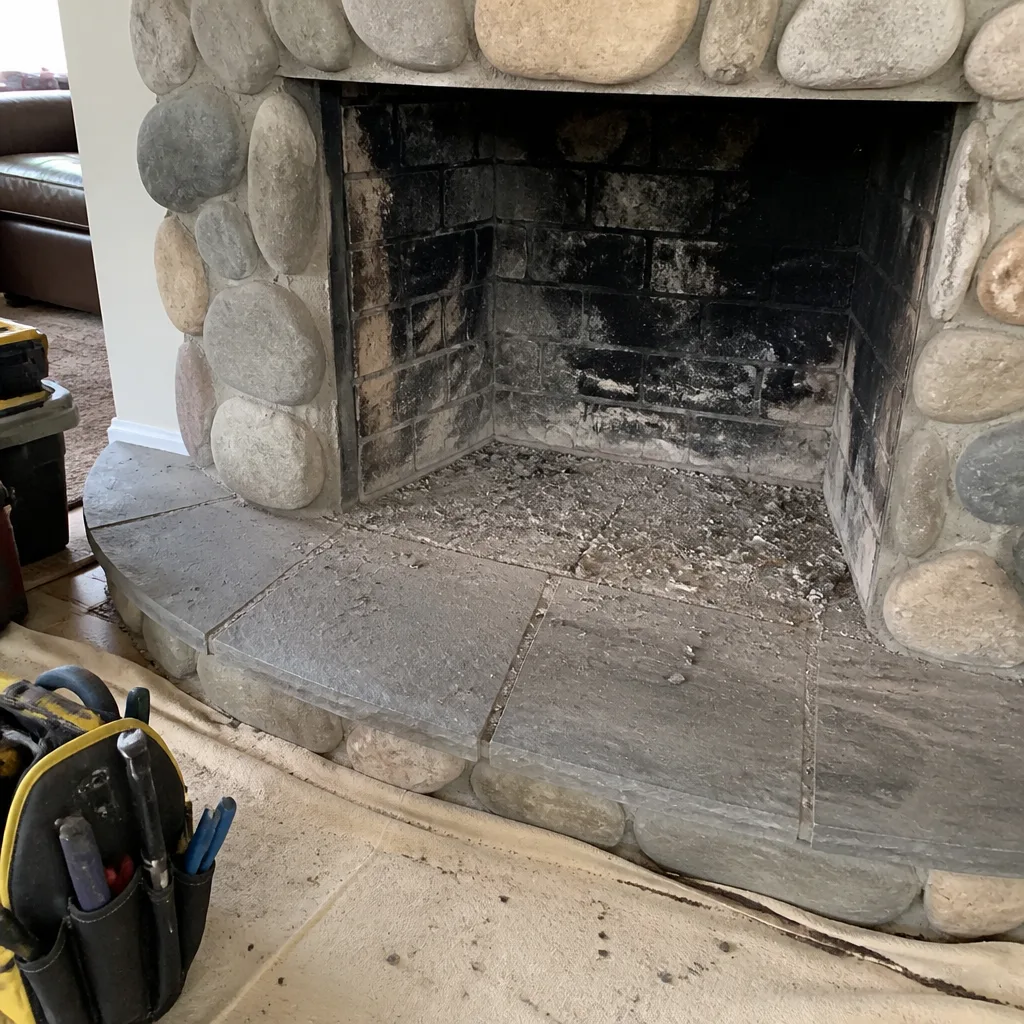 Before
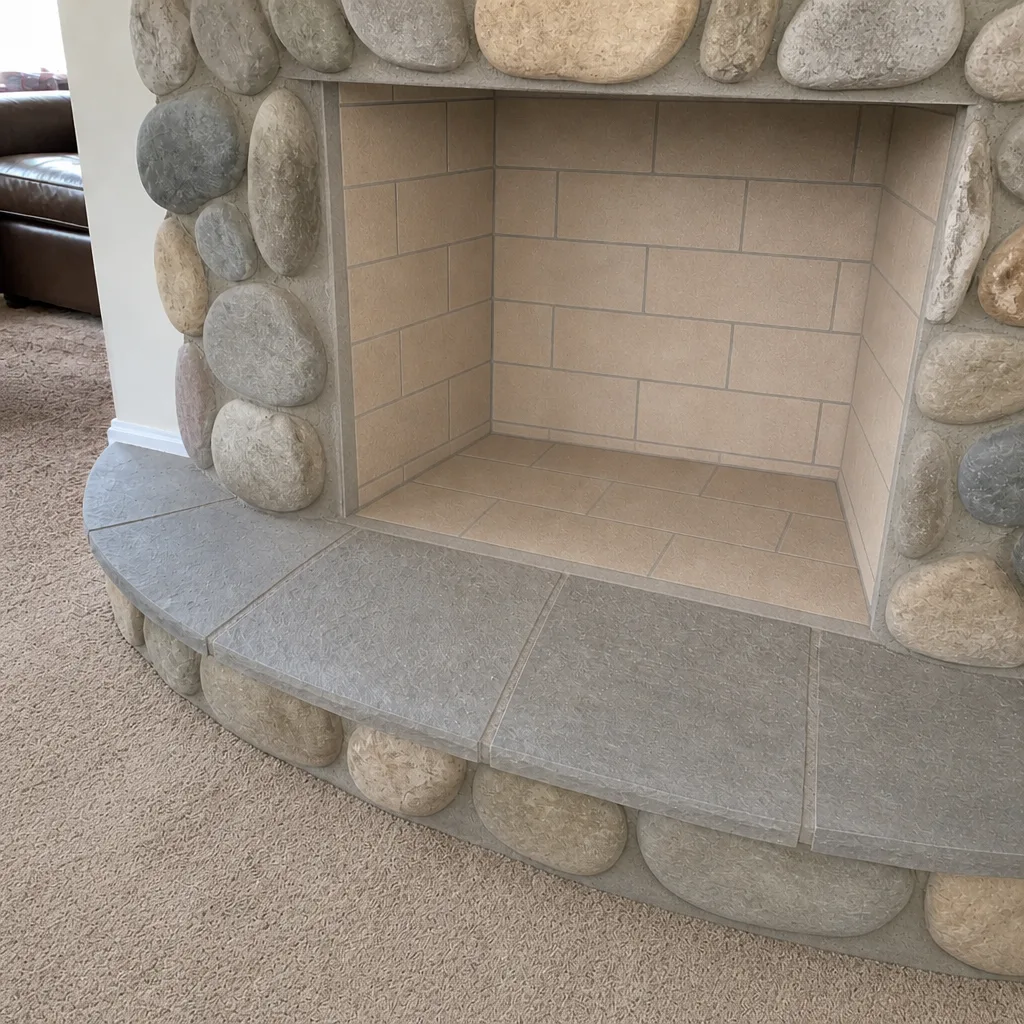 After
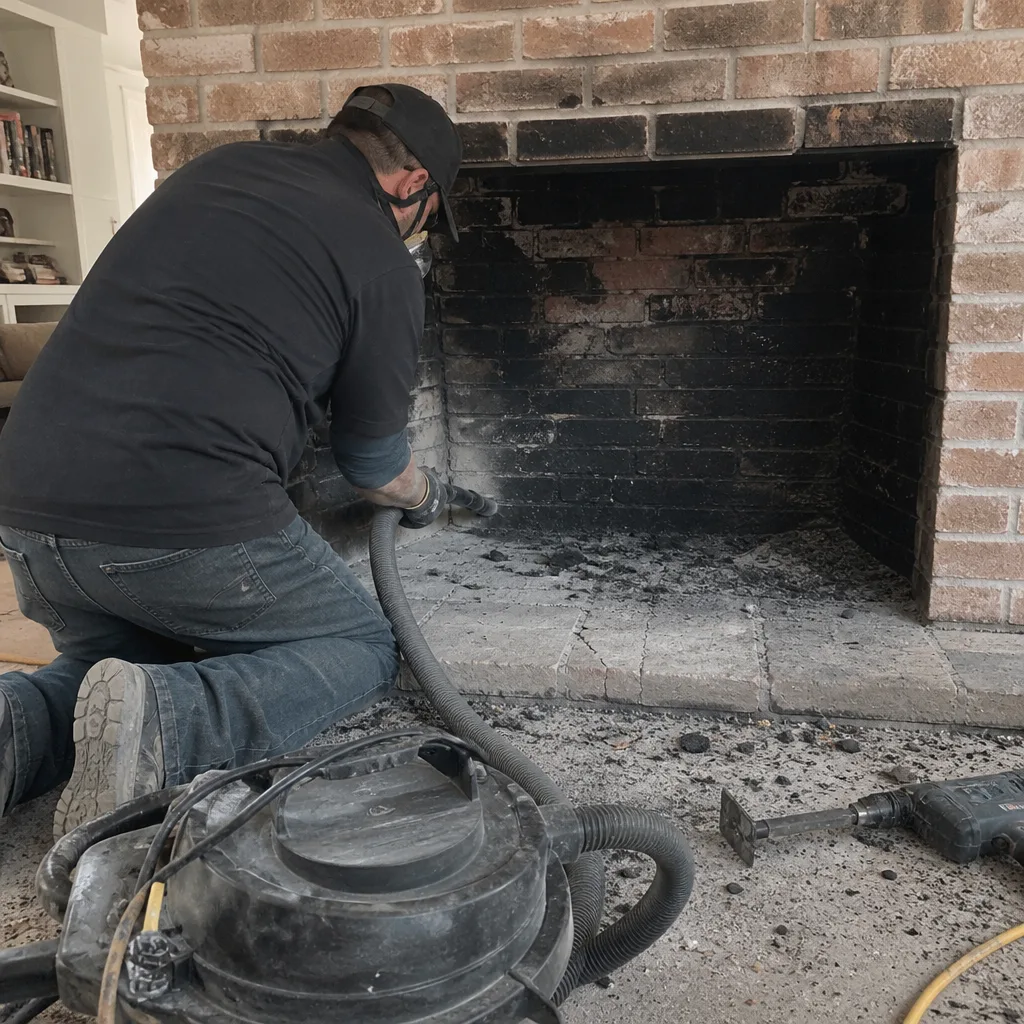 Before
 After
 Before
 After
When to Call a Professional
Call a professional if the fire won’t draw despite a fully open damper, if water is staining the ceiling or firebox, if you can see damage to the cap or crown from the ground, if the smell persists after cleaning, or if you haven’t had the chimney inspected in several seasons. Any of these points to a cause that a brush alone won’t solve. If you’re a Lake Stevens homeowner buying a house, a formal inspection gives you documentation for the transaction. If you’re not sure whether the problem is cleaning or repair, the right first step is a diagnosis, not a cleaning. Chimney Sweep Lake Stevens offers free estimates in Lake Stevens, call (855) 550-7486. We answer 24/7. Fast dispatch from 7am to 7pm, Sunday through Friday.
Frequently Asked Questions
A standard chimney sweep in Lake Stevens typically costs $180 to $280, and a camera inspection is usually included in the price, not added afterward. If the inspection turns up a liner issue or a damaged crown, the repair is quoted separately from the sweep. We give a flat price agreed before the work is booked, so there are no surprises when the technician arrives. Call (855) 550-7486 for an exact quote; estimates are free.
Smoke after a cleaning is almost always a pressure problem, a cap problem, or a damaged liner, none of which cleaning addresses. A clean flue still backdrafts if the house is pulling air down it, and it still downdrafts if the cap is missing or damaged. A camera inspection and a draft test will separate those causes. Call (855) 550-7486 to book a diagnosis so the fix targets the right problem.
Not always. Many flues with hairline cracks are candidates for HeatShield resurfacing rather than a full reline, and some can safely be monitored. A new DuraFlex liner is usually only needed when the existing tile is delaminated, missing sections, or the wrong size for the appliance. The decision should follow the camera photos, not a sales pitch. Call (855) 550-7486 for an assessment; estimates are free.
For a wood-burning fireplace in active use, an annual sweep and inspection is the standard. A gas appliance needs an inspection on the same schedule, though it usually needs less frequent cleaning. If you burn a lot of fires through the colder months in Lake Stevens, have it checked once a year regardless of how much buildup you think is there. Call (855) 550-7486 to book it.
The risks are two: chimney fire from creosote buildup, and carbon monoxide from a blocked or cracked flue. Neither is visible from the outside, and neither gives you a warning before it matters. Beyond safety, small problems get expensive: a cracked crown leads to spalling masonry, and a cracked liner leads to water damage and a reline. Call (855) 550-7486 to book an inspection before burning season.
Yes, in many cases the diagnosis, cleaning, and a cap replacement or draft adjustment can be completed in one visit if the inspection doesn’t reveal structural damage. If the flue needs resurfacing or relining, that’s a separate scheduled job once the photos have been reviewed. We book the sweep with the inspection included so the visit is complete, not a first step. Call (855) 550-7486 to schedule.
The Bottom Line
Most chimney problems in Lake Stevens are diagnosable before anyone picks up a brush. The problem is that the obvious symptom (smoke, smell, weak fire) points to a cause that cleaning only sometimes fixes. A structured inspection with a camera, a pressure test, and a documented photo report is what separates the chimney that needs a sweep from the chimney that needs a cap, a crown, or a liner. That’s what we do: sweep, inspect, repair masonry and liner, and install caps and crowns as one system so nothing gets missed. If your chimney is giving you trouble, get the diagnosis first and the work follows the evidence.
Call (855) 550-7486 for a free estimate. We answer 24/7. Fast dispatch from 7am to 7pm, Sunday through Friday. Our technicians have up to 15 years of experience.
Written by the team at Chimney Sweep Lake Stevens.